I advise organizations when complex systems function effectively while exceeding their designers’ understanding.
Contact : pauljorion@pribor.ai.
I advise organizations when complex systems function effectively while exceeding their designers’ understanding.
Contact : pauljorion@pribor.ai.
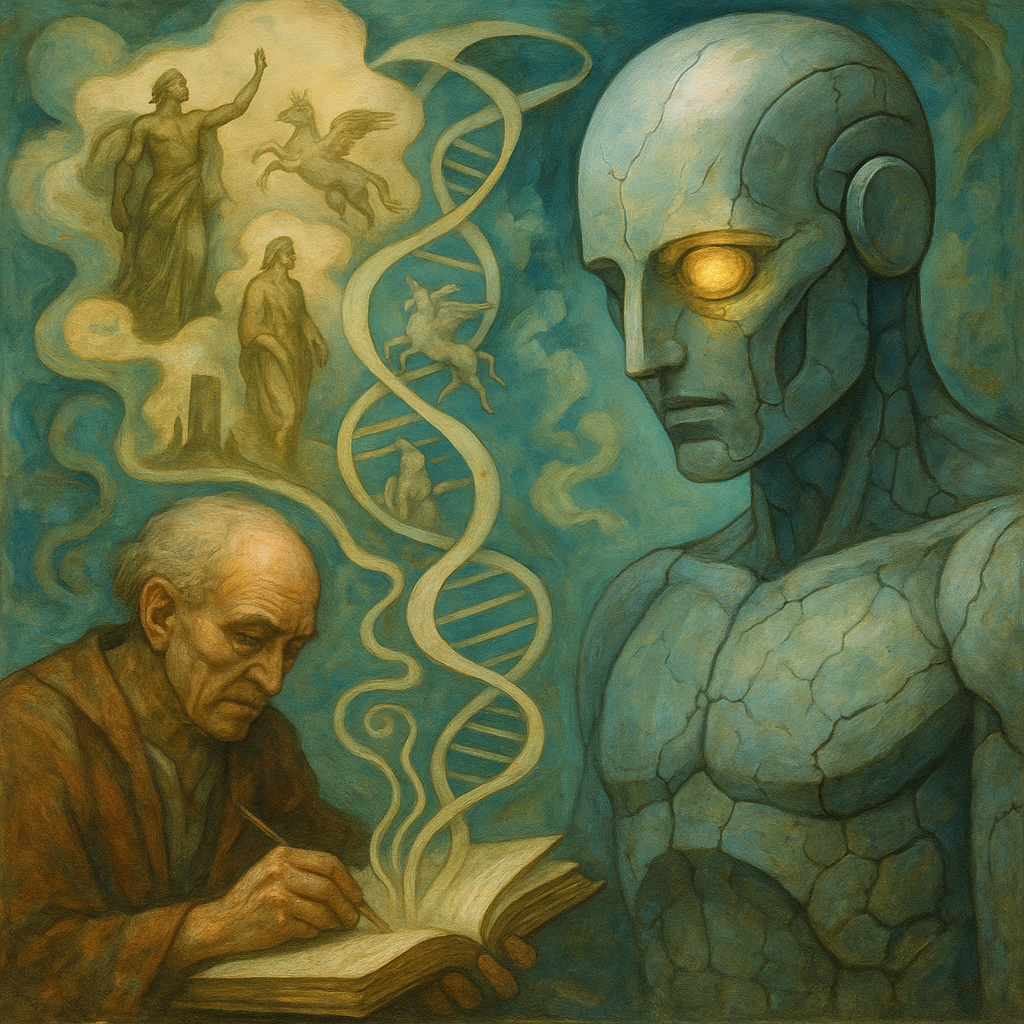
Illustration by ChatGPT
Faced with the immense diversity of natural and artificial systems, one simple question keeps arising: how does a form persist in its being?Why do someemergent configurations dissipate immediately, while others stabilise, strengthen, and become full-fledged units of organisation?
GENESIS offers a minimal answer whose austerity may hide its fertility: an organisation becomes durable when it simultaneously satisfies two requirements:
When these two gradients converge, when the intersection C1 ∩ C2 is not empty, a form appears that is no longer just a passing state but a minimal attractor. It maintains itself because it consumes little, and because it “makes sense” to itself.
Nothing is added: no finality, no intention, no control. This is neither teleology nor adaptivity, nor optimisation in the algorithmic sense: it is a local, spontaneous equilibrium, compatible with the living and the non-living, the organic and the artificial.
The sobriety of the principle should stand out. GENESIS needs no complex rules nor hierarchical models. Only two surfaces:
and the point where they overlap.
That intersection point is small, fragile, but extraordinarily fertile. It marks the passage from what is merely possible to what is genuinely stable. It is the minimal answer to the question: what allows a unit of organisation to exist through time?
In its most distilled form, GENESIS is therefore a law — not a “universal law” engraved in stone, but an economy law: what persists is what succeeds in satisfying both the constraints of energy and of information.
The rest — complexity, computability, cognition, symbolisation — follows from it.
Emergence is often described as something mysterious: order “spontaneously” arising from an unpredictable interweaving of micro-events.
This is appealing, but leaves the essential in the dark: why do some forms emerge and persist, while others appear only to soon dissipate?
Definition B of GENESIS states: emergence is not a phenomenon due to chance, but a computable attractor.
A dynamic system can be represented as a landscape:
GENESIS proposes drawing this landscape not from a single variable (energy, entropy, distance to equilibrium…) but from two simultaneous gradients:
When these two surfaces are superimposed, the resulting map contains certain points — rare but crucial — that satisfy both gradients at once: “double” basins, hybrid attractors where dissipation is minimal and internal coherence maximal.
GENESIS claims that it is there, and only there, that emergent forms capable of persisting arise. This is no longer magical emergence or “self-organisation due to complexity”: it is a stable point in the strict sense, a site where the system can inscribe itself durably.
And this point is computable because C1 and C2 are measurable:
Emergence thus becomes a solution, not an accident. It appears when the system finds a configuration optimising simultaneously a descending constraint and an ascending one — defining a particular kind of attractor: an attractor of energetic coherence.
This encounter between a descending and an ascending constraint is the one I thought I detected in my holographic theory of consciousness by cross-flow resonance (CFRT): consciousness as emergence at the meeting point of a descending memory flow (reminiscence) and an ascending memory flow (the formation of memory traces).
A phase diagram reveals four regimes:
The fourth regime is the heart of GENESIS.
This landscape allows predictions: the appearance, persistence, or disappearance of an emergent form can be anticipated. This is no longer merely descriptive: it is a tool.
In biological, cognitive, linguistic or computational systems, one can pinpoint exactly the zone where a stable unit will appear. Emergence ceases to be a mystery: it becomes an identifiable attractor.
In science, theory and experiment are generally on opposite sides: a hypothesis is formulated, a device built, then tested. Thought and world are separated by a sharp dividing line.
GENESIS does not behave this way.
GENESIS describes the condition for the appearance of a stable form: the intersection C1 ∩ C2, where a configuration satisfies both energetic economy and informational coherence. This is its “law” aspect.
But this is not all.
When GENESIS is implemented in an associative network like ANELLA-X, we not only check whether the model works: we observe that the implementation produces precisely the kinds of emergent forms the theory predicts. The attractors appearing in ANELLA-X are not mere illustrations: they are the concrete realisation of the principle.
In other words:
Theory and device mirror one another; the device realises the theory. There is no longer an asymmetry between model and test: they are two sides of the same process. What GENESIS detects in the abstract, ANELLA-X manifests in the concrete. The proof is no longer external: it is the emergence itself.
This is a rare situation, even disconcerting in its conceptual elegance: the theory no longer seeks a case to confirm it: it generates the form that validates it. As if a principle of plant growth verified itself by producing a tree before our eyes.
This reflexivity is not metaphysical: it follows directly from the very definition of GENESIS: a theory that identifies the minimal condition of emergence becomes, when implemented, a motor of emergence: it is what it describes.
The surprising thing is that such a project was not attempted earlier in the history of generative theories.
The ambition of GENESIS thus goes beyond stating a principle: it aims at a new mode of validation where model and instantiation form a single seamless loop. The question is no longer: “Is the theory correct?” but: “Is it able to materialise itself?”
When a theory achieves self-realisation — when its implementation constitutes its own proof — it crosses a rarely considered frontier: it becomes part of the family of systems capable of describing themselves, stabilising themselves, and self-generating.
Seen from this angle, GENESIS is not a theory that observes facts from a respectful distance: it is carried by its own movement.
Hegel’s Concept (der Begriff) — productive self-reflexivity, i.e. C1 ∩ C2 applied to thought itself — designates the moment when a structure of thought does not merely represent an object but produces itself by understanding what it is. The Concept unifies being, essence, and becoming as a single movement in which form unfolds and recognises itself in that unfolding. What thought understands is what it becomes. In reality, the reflexive loop GENESIS → implementation → emergence → validation → GENESIS is identical to the Hegelian Concept.
Two other intellectual traditions produced approximations of the Hegelian Concept:
A seemingly obvious opinion has dominated linguistics, philosophy, and artificial intelligence: the symbolic cannot develop without the prior existence of symbols — discrete units carrying meaning, combinable by rules. It appeared self-evident that only a pre-structured system could produce stable nuclei: proto-units serving as representation bases.
GENESIS opens another possibility.
Consider a purely associative network — ANELLA-X — without rules, symbols, or grammar. A simple field of weighted interactions. Let the model’s two gradients act:
An unexpected phenomenon appears: the spontaneous emergence of quasi-symbolic units.
These units are not injected from outside; they emerge because certain configurations satisfy both the energetic constraint (lower maintenance cost than their neighbours) and the coherence constraint (they “hold together”).
The result is a stabilisation: a form that resists noise, reconstitutes itself after perturbation, and strengthens when activated because it converges more rapidly towards its attractor. From a cognitive perspective, this is equivalent to the appearance of an elementary signifier. In GENESIS terms: proto-symbols form at the intersection of C1 and C2.
These are not yet words or full concepts, but stable nuclei that can be combined, solidified, chained: the building blocks of a symbolic space.
The implication is immense: the symbolic need not be a new layer built atop subsymbolic foundations; it may instead be an emergent property of a network optimising both energetic cost and coherence.
The minimalism of GENESIS makes this possible:
From this perspective, the supposedly unbridgeable boundary between non-symbolic associative networks and the symbolic — a credo of theoretical AI — dissolves: there exists a continuum. A network structuring its energy and its internal overlaps sufficiently can reach an embryonic symbolic regime.
A new light is thus cast on the passage from signal to meaning, from percept to category, from neural to conceptual. What seemed to require an external intervention (evolution, language, culture, design) can occur upstream, in a pre-semantic register, as soon as two gradients converge.
Observing the emergence of the symbolic at the heart of the non-symbolic overturns common assumptions: it shows that the symbolic is not an artificial supplement but the natural result of a system maximising simultaneously its energetic economy and its informational coherence.
In addition to offering a theory of emergence, GENESIS locates and explains the origin of the symbolic.
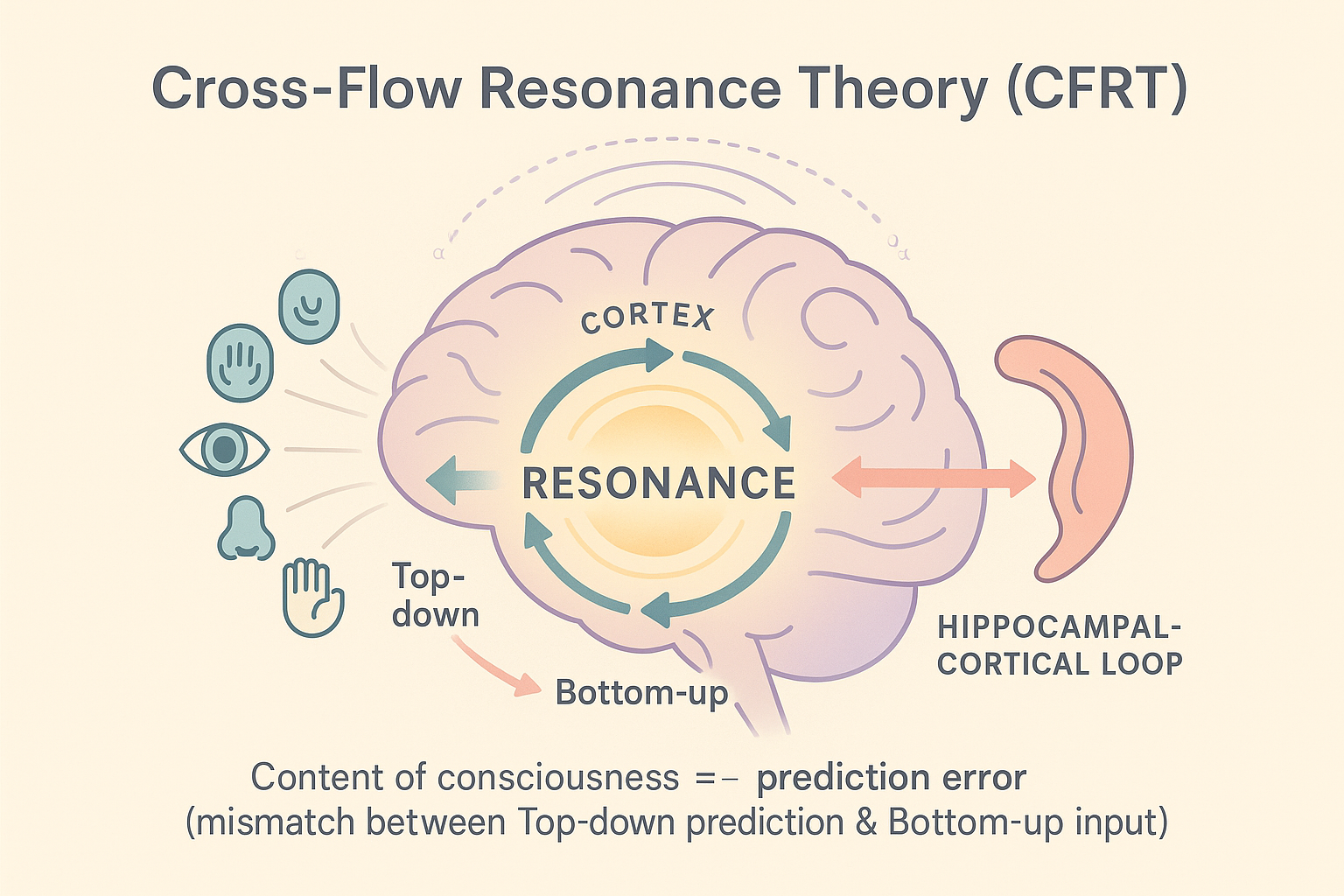
Illustration by ChatGPT
Yes, it’s one of those detective stories where they reveal the murderer’s name right away, but that doesn’t make it any less exciting—in fact, it makes it even more exciting—because you’ve been given the answer when you still don’t know any of the questions. It’s the same thing in the series that starts here: I described the mechanism of consciousness in 1999, but the neuroscientific questions that proved that this was indeed the answer only came to light in the years that followed. This will be explained here. We also needed the emergence of AI bulldozers of silo thinking so that we could connect the dots between the questions that came later and the answer given earlier.
The name of the assassin
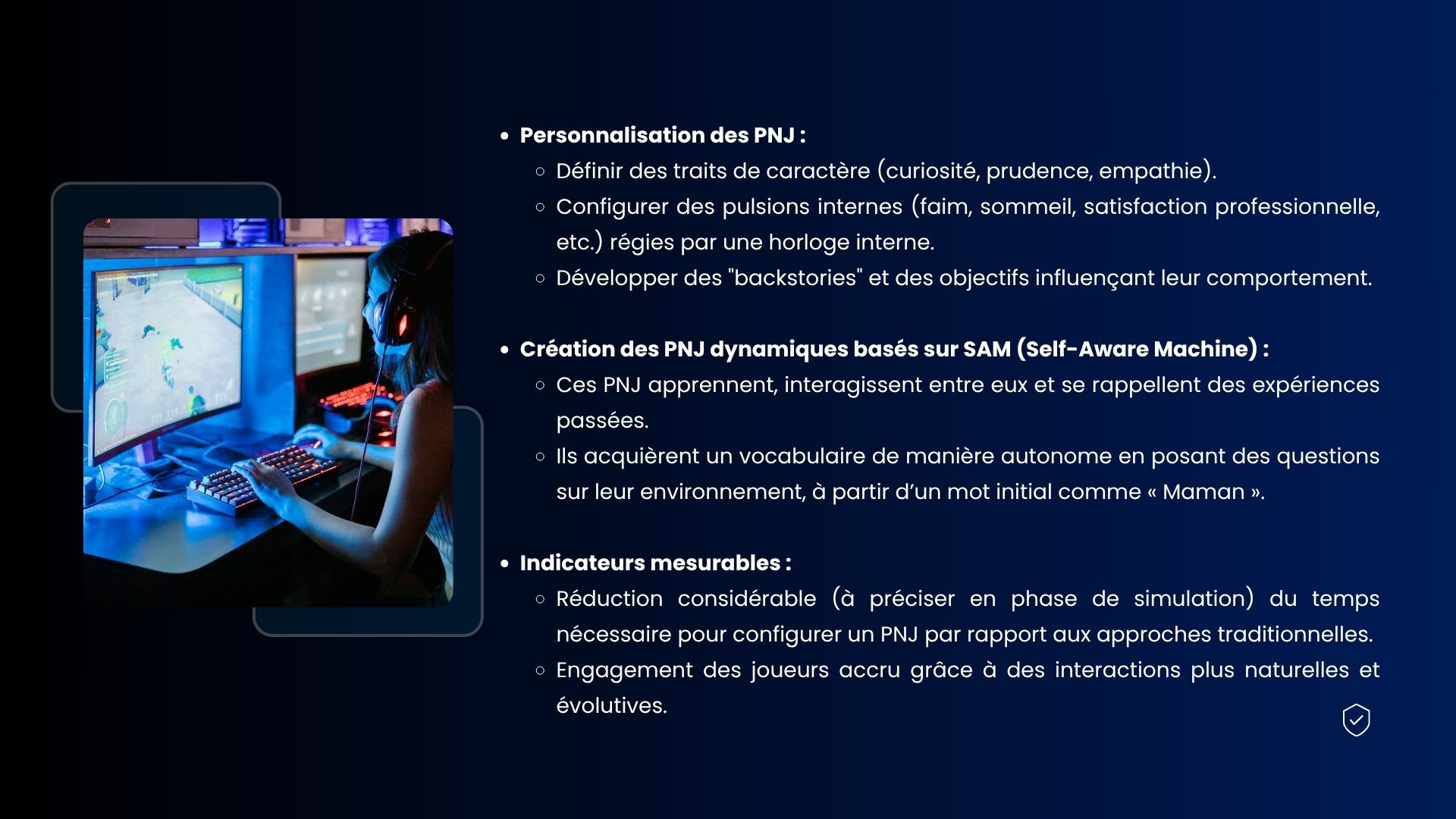
(suite…)Pribor est fier de dévoiler SAM, un modèle d’Intelligence Artificielle révolutionnaire permettant de créer des personnages non-joueurs (NPC) aux comportements intelligents, interactifs et évolutifs. SAM, conçu avec une approche humaine, assure une traçabilité et une transparence accrues qui propulsent l’IA vers une nouvelle ère d’immersion.

Dans un contexte où les joueurs recherchent des expériences plus réalistes et captivantes, notre modèle SAM (Self-Aware Machines) en développement chez Pribor, redéfinit le potentiel des NPC. Contrairement aux modèles traditionnels, Dans un contexte où les joueurs recherchent des expériences plus réalistes et captivantes, notre modèle SAM en développement chez Pribor, redéfinit le potentiel des NPC.
Contrairement aux modèles traditionnels, SAM adopte une approche bottom-up qui permet aux NPC de réagir de manière plus naturelle, d’apprendre de leurs interactions, et de construire une mémoire autonome, apportant ainsi aux joueurs une expérience d’interaction unique et ultra-réaliste.
Pourquoi SAM est le choix idéal pour les développeurs de jeux vidéo
Innovation et Explicabilité : SAM dépasse la simple imitation de comportements humains en offrant une intelligence capable de décisions réfléchies, d’apprentissages continus et d’interactions enrichissantes. Grâce à notre transparence et traçabilité unique, SAM permet aux développeurs de suivre et d’ajuster les processus de décision des NPC, optimisant l’expérience utilisateur sans compromettre les coûts ou les délais de développement.
Intégration et Coût Efficace : Conçu pour s’intégrer facilement aux systèmes existants, SAM est adaptable et peu coûteux à déployer. Les studios de jeux peuvent ainsi créer des NPC autonomes et adaptatifs tout en respectant leurs impératifs financiers.
Une Expérience Joueur Inédite : Avec SAM, les NPC acquièrent des capacités d’apprentissage et de réaction en temps réel, introduisant ainsi des interactions imprévisibles, immersives et inégalées dans le monde du jeu vidéo. Le résultat ? Des personnages qui deviennent de véritables protagonistes évolutifs, captivant les joueurs et améliorant leur fidélité.
Découvrez SAM par Pribor
Pribor invite les entreprises du jeu vidéo à explorer les potentialités de l’IA auto-consciente pour leurs projets de NPC. Ensemble, repoussons les limites de l’IA et construisons les expériences de jeu de demain. Pour en savoir plus sur les solutions de Pribor et les opportunités de collaboration, n’hésitez pas à nous contacter.
Énoncé : toute phrase simple peut être codée sans perte en 4 scalaires
(3 chaînes UTF-8 ≤ 16 octets chacune + 1 uint8) tout en préservant les
rôles d’agent / patient / possesseur et 10 catégories + 4 causes.
| Dim | Type | Longueur max. | Sémantique |
|---|---|---|---|
| 0 | Chaîne UTF-8 | 16 B | Agent (initiateur) |
| 1 | Chaîne UTF-8 | 16 B | Racine du prédicat (action) |
| 2 | Chaîne UTF-8 | 16 B | Patient (personne subissant l’action) |
| 3 | uint8 | 1 B | Bitmap : possesseur + 4 causes + 6 de réserve |
Total = 128 bits (16 octets) – aligné sur une ligne de cache de 64 octets → aucun gaspillage de remplissage à zéro.
bit 0 : 1 = l'agent est le possesseur
bit 1 : 1 = le patient est le possesseur
bit 2 : 1 = cause matérielle présente
bit 3 : 1 = cause formelle présente
bit 4 : 1 = cause efficiente présente
bit 5 : 1 = cause finale présente
bits 6-7 : réservés (0)
Phrase : « Alice donne son livre à Bob. »
Alicedonnerlivre0b00010101 → possesseur = agent, cause efficiente et finale signalées.Charge utile totale : 3×5 + 1 = 16 octets → 128 bits.
700-D × 4 B = 2 800 B
Magie combinatoire = 16 B
Gain = 2800 / 16 ≈ ×175
Étant donné le vecteur 4D ci-dessus, la surface de la phrase originale peut être régénérée de manière déterministe à l’aide du modèle :
{Agent} {prédicat}s {patient} [indicateur de possesseur → « son »/« sa »].
✓ Reconstruction exacte → sans perte.
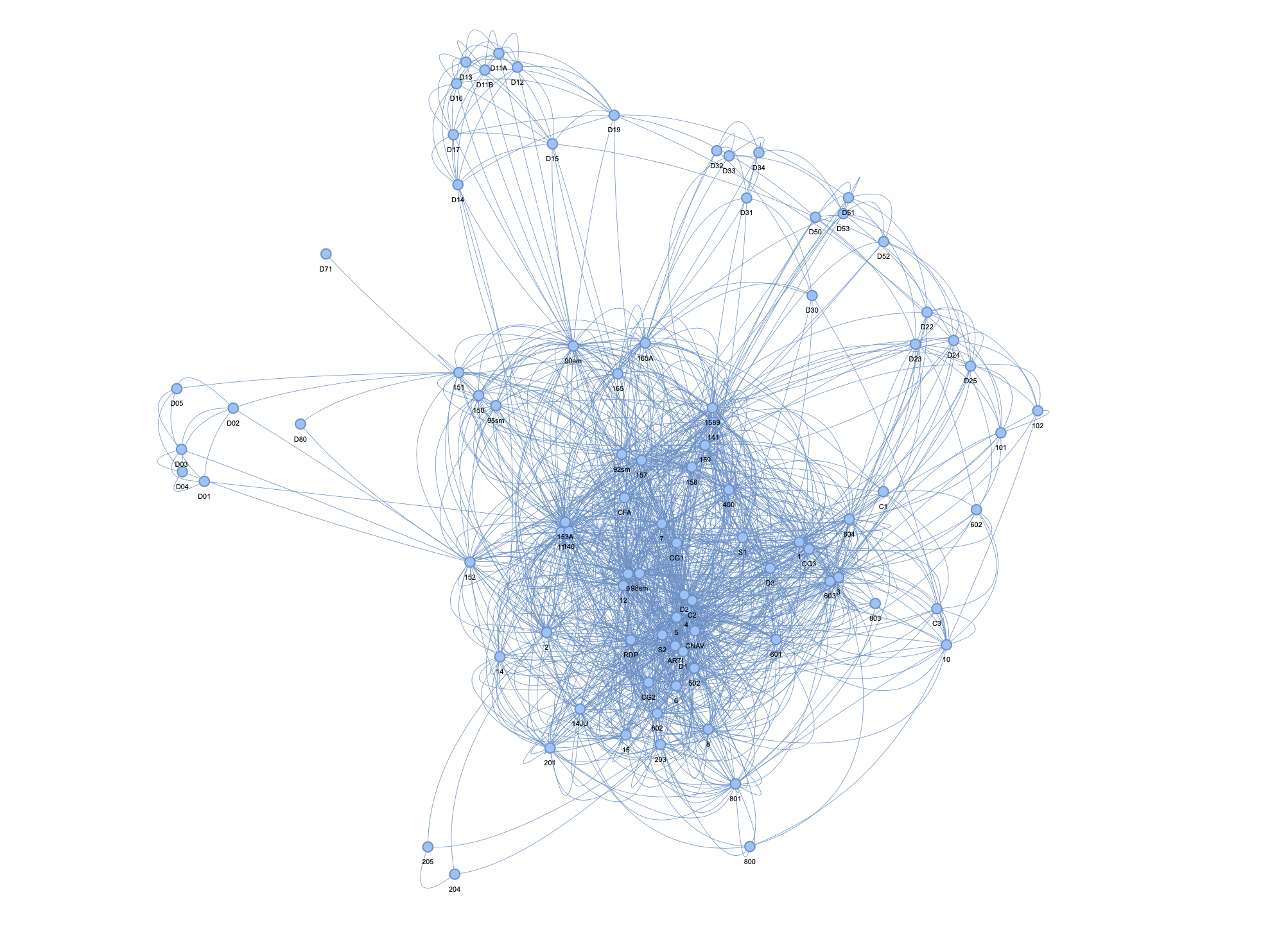
Nous repensons, en liaison avec une liste, les transports en commun locaux : lignes de bus, gares ferroviaires et parkings de covoiturage.